
How to Hold a Gardening Trowel — The Right Way for Comfort, Control & Safety 🌱
Discover how to hold a gardening trowel the right way. Improve your grip, prevent wrist strain, and dig more efficiently with this simple ergonomic guide.
Why Proper Grip & Posture Matters
Using a trowel might seem simple — but how you hold it makes a big difference. The right grip and posture help you:
- Dig or plant with less effort, using leverage instead of brute force.
- Avoid hand, wrist, or forearm strain — especially important during longer gardening sessions.
- Maintain control for precision work (like transplanting seedlings, planting bulbs, or digging in tight spots).
- Reduce risk of slipping or tool-related accidents — holding a trowel properly is safer.
✅ Step-by-Step: How to Hold a Trowel Properly
Here’s a reliable technique to hold a trowel for most gardening tasks:
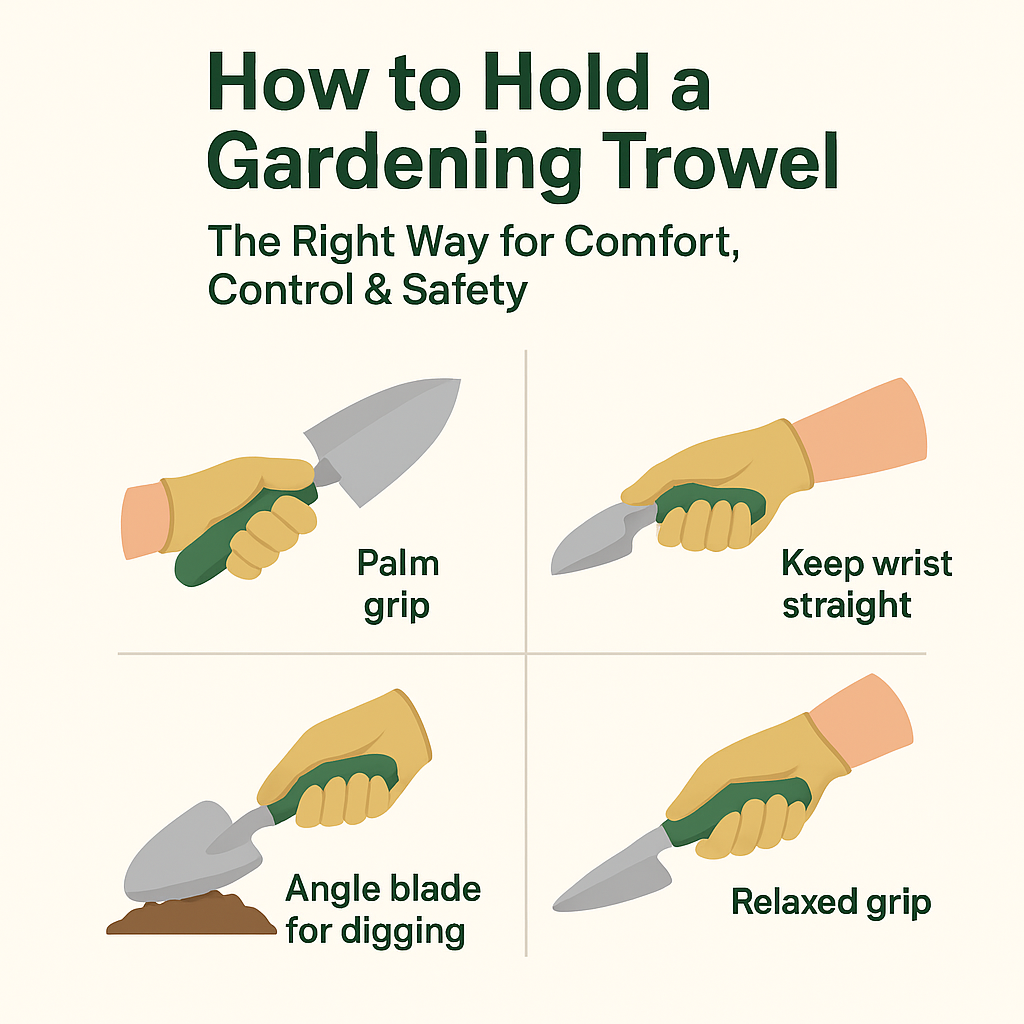
- Palm Grip — Full handle wrap: Wrap all your fingers around the handle so that the blade extends from the thumb side. This “power grip” gives strength and control for digging or breaking soil.
- Keep wrist neutral (straight): Your wrist should stay in line with your forearm — don’t bend it up or down. This reduces strain and preserves grip strength.
- Angle the blade properly when digging: For digging or scooping soil, insert the trowel at a slight angle (about 45° to the soil surface) to reduce resistance and gain leverage.
- Use wrist and forearm, not just fingers: Engage forearm muscles instead of over-relying on finger strength for repeated digging or soil loosening — helps avoid fatigue.
- Switch grip for precision tasks: For delicate jobs (e.g. transplanting seedlings), you can choke-up — hold nearer to the blade for better control, but avoid sustained tight grip to prevent hand fatigue.
🧰 Choosing the Right Trowel for a Good Grip
Not all trowels are equal. For comfort and effectiveness, pick one with:
🔥 Our Trending Gardening Picks
- Ergonomic handle — rubberized or textured grip helps, especially when soil or hands are wet.
- Handle size that fits your hand — too thin leads to cramps; too thick becomes hard to grip firmly.
- Balanced weight & good blade-to-handle ratio — a well-balanced trowel reduces wrist strain and gives smooth control.
- Appropriate blade type for the job — narrow blades for bulbs/seedlings or tight spaces; wider scoop for general digging or mixing soil.
⚠️ Common Mistakes & How to Avoid Them
| Mistake | Why It’s Bad | What to Do Instead |
|---|---|---|
| Gripping too tightly with fingers only | Leads to hand fatigue, blisters, possible strain or repetitive-use injuries | Use full palm grip and relax grip pressure a little — let forearm do more work |
| Bending wrist while digging | Reduces grip strength, increases stress on wrist/forearm | Keep wrist in neutral alignment with forearm |
| Using a trowel with a thin or slippery handle | Slippery grip makes tool slip or requires stronger grip — risk of injury or accidents | Choose a handle with good grip material and right diameter for your hand |
| Overworking without breaks | Leads to joint pain, fatigue, strain injuries | Take short breaks; change tasks or hand positions periodically |
📝 Extra Tips for Comfortable, Safe Gardening with a Trowel
- Wear well-fitting gloves with good traction — gloves with rubberized or textured surfaces improve grip and protect your hands.
- Keep tools clean and dry — mud or moisture reduces grip; wiping the handle clean before grip helps a lot.
- Maintain good posture — when digging repeatedly, bend at your knees or hips rather than straining your back. Use gentle, steady motions rather than jerky force.
- Alternate hands or tasks — avoid over-using one hand or position; switching hands or tasks reduces fatigue and overuse strain.
Frequently Asked Questions (FAQ)
1. What are organic gardening tips?
Organic gardening tips are natural methods used to grow plants without synthetic fertilizers, chemicals, or pesticides. These techniques help improve soil health, boost plant growth, and create an eco-friendly garden.
2. How can organic methods improve my garden?
Organic growing improves soil fertility, promotes beneficial microbes, increases plant immunity, and reduces harmful chemicals—leading to healthier plants and a sustainable garden.
3. Are organic gardening solutions safe for pets and kids?
Yes! Organic fertilizers, compost, and pest-control methods are non-toxic and safe for children, pets, and wildlife.
4. What are some easy organic tips for beginners?
- Use homemade compost
- Grow seasonal plants
- Add mulch to retain moisture
- Use neem oil for natural pest control
- Water early in the morning
5. Do organic methods cost more?
Not necessarily. Many organic practices—like composting, using kitchen waste, or making natural sprays—are cost-effective and reduce expenses in the long run.
6. Can organic gardening increase plant yield?
Yes. Healthy soil leads to stronger root systems and higher-quality yields, especially in vegetables and herbs.
7. What is the best organic fertilizer?
Compost, vermicompost, cow manure, bone meal, and seaweed extract are some of the best organic fertilizers for home gardens.
8. How do I manage pests organically?
Use neem oil, soap sprays, garlic-chili spray, and companion planting (like marigold with tomatoes) to naturally repel insects.
9. Can I grow an organic garden in small spaces?
Absolutely. Organic methods work well in balconies, terraces, pots, and raised beds.
10. Do you provide custom banners related to organic gardening?
Yes, we offer high-quality PNG/JPG banners featuring organic garden tips, ideal for blogs, websites, and social media promotions.
Discover more from Ecorganicas
Subscribe to get the latest posts sent to your email.



2 Comments on “How to Hold a Garden Trowel Without Wrist Pain – Expert Technique”