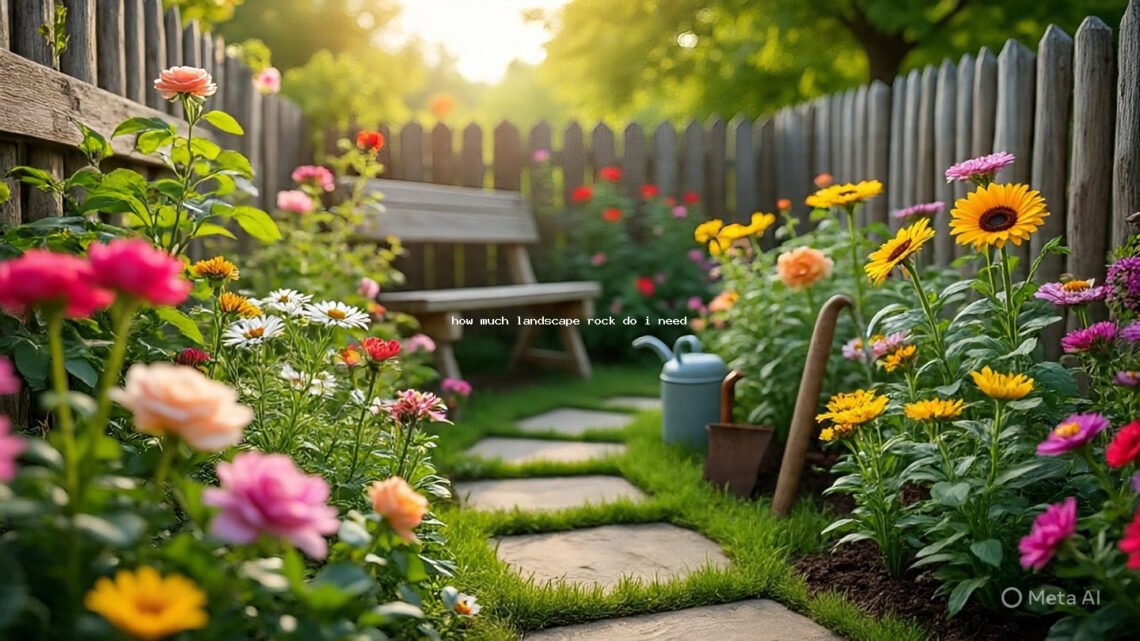
how much landscape rock do i need
How Much Landscape Rock Do I Need?
Embarking on a garden transformation project is an exciting endeavor, promising a refreshing aesthetic and enhanced functionality for your outdoor sanctuary. Among the myriad choices for hardscaping materials, landscape rock stands out as a versatile, durable, and increasingly popular option for gardeners across Bengaluru and beyond. From creating elegant pathways to defining garden beds, suppressing weeds, and conserving precious water, the benefits of incorporating landscape rock are undeniable. Imagine stepping into a garden where vibrant foliage is beautifully contrasted by the earthy tones and varied textures of meticulously placed stones, where maintenance is minimal, and beauty is evergreen. This dream is entirely achievable with landscape rock.
However, the initial excitement often gives way to a common, perplexing question: “How much landscape rock do I need?” This seemingly simple query can quickly become a significant hurdle, leading to either costly over-ordering or frustrating under-ordering, both of which can derail your project’s timeline and budget. Picture this: you’ve planned your design, chosen your favourite river stones or elegant crushed granite, and are ready to begin, only to find yourself scrambling for more material midway through, or worse, left with a massive surplus that takes up valuable space and money. The precise calculation of landscape rock isn’t just about saving money; it’s about efficiency, environmental responsibility, and ensuring a seamless execution of your vision. It means avoiding multiple trips to the supplier, reducing fuel consumption, and minimizing the potential for project delays. It’s about getting it right the first time, allowing you to focus on the creative aspects of your landscaping, rather than the logistics of material procurement.
🔥 Our Trending Gardening Picks
In a city like Bengaluru, where water conservation is paramount and a vibrant outdoor space is a cherished escape from urban bustle, choosing the right materials and quantities becomes even more critical. Landscape rock not only adds aesthetic appeal but also plays a crucial role in sustainable gardening practices, reducing the need for thirsty lawns and frequent watering. Understanding how to accurately calculate your rock requirements ensures you maximize these benefits without unnecessary waste or expense. This comprehensive guide is designed to demystify the process, equipping you with the knowledge, formulas, and expert tips needed to confidently determine the exact amount of landscape rock for your project. Whether you’re a seasoned gardener or just starting your landscaping journey, prepare to transform your outdoor space with precision and flair.
Understanding the Basics: Why Landscape Rock?
Before we dive into the nitty-gritty of calculations, let’s reaffirm why landscape rock is such a fantastic choice for your Bengaluru garden. Its appeal goes far beyond mere aesthetics, offering a multitude of practical benefits that contribute to a more sustainable, low-maintenance, and visually striking outdoor space. When you choose landscape rock, you’re investing in a durable solution that enhances your garden’s beauty and functionality for years to come.
Aesthetic Enhancement and Design Versatility
Landscape rock offers unparalleled versatility in design. From the earthy tones of crushed granite that complement traditional Indian architecture to the smooth, serene curves of river stones that evoke a tranquil water feature, there’s a rock type to suit every design sensibility. Rocks can define pathways, create borders for flowerbeds, construct stunning rock gardens, or even form the backbone of a sophisticated xeriscape design. They introduce texture and contrast, making your plants pop and creating a dynamic visual interest that changes with the light and seasons. The natural variation in colour and shape means no two rock installations are ever exactly alike, giving your garden a unique and authentic character. Imagine a serene pathway bordered by dark grey pebbles, leading to a vibrant bed of bougainvillea – the contrast is simply breathtaking.
Superior Weed Suppression
One of the most celebrated benefits of landscape rock, especially in the humid climate of Bengaluru, is its effectiveness as a weed barrier. A sufficiently deep layer of landscape rock, particularly when combined with a high-quality landscape fabric underneath, acts as a formidable shield against unwanted growth. By blocking sunlight from reaching weed seeds in the soil, rocks significantly reduce germination and growth. This means less time spent on back-breaking weeding, freeing you up to enjoy your garden rather than constantly battling invaders. For gardeners seeking a low-maintenance solution, this benefit alone can be a game-changer, dramatically cutting down on routine chores.
Crucial Water Conservation
In a region where water resources are increasingly precious, landscape rock emerges as a champion of water-wise gardening. Unlike organic mulches that decompose and require replenishment, rocks do not absorb water, but they do help reduce evaporation from the soil beneath. This means your plants require less frequent watering, conserving a vital resource and lowering your water bills. For those embracing xeriscaping – the practice of landscaping with drought-tolerant plants – landscape rock is an essential component, creating an attractive and functional environment that thrives with minimal irrigation. It helps maintain a more consistent soil temperature, protecting plant roots from extreme heat, a common challenge in tropical climates.
Long-Term Durability and Low Maintenance
Unlike organic mulches that break down and need to be replaced annually, landscape rock is a one-time investment that lasts for decades. It doesn’t decompose, blow away in strong winds, or attract pests in the same way some organic materials might. Once installed, your rock landscape requires minimal upkeep – perhaps an occasional rinse to remove dust or a light raking to redistribute. This translates to significant savings in both time and money over the long run, making landscape rock an incredibly economical choice despite its initial cost. It’s a set-it-and-forget-it solution that continues to deliver beauty and functionality year after year. For more on low-maintenance gardening, check out our guide: https://ecorganicas.org/shop/.
The Core Calculation: Area, Depth, and Density
The heart of determining how much landscape rock you need lies in a simple yet precise calculation that considers the area you wish to cover, the desired depth of the rock layer, and the specific density of the rock material itself. Mastering this calculation will save you time, money, and frustration. Don’t worry, it’s easier than it sounds!
Measuring Your Area: The Foundation of Accuracy
The first step is to accurately measure the space you intend to cover with landscape rock. Precision here is key. Grab a measuring tape, some stakes, and string, and let’s get started.
- For Rectangular or Square Areas: This is the simplest. Measure the length and width of the area in feet. Multiply these two measurements to get the total square footage.
Example: An area that is 20 feet long and 10 feet wide would be 20 ft * 10 ft = 200 square feet. - For Circular Areas: Measure the radius (distance from the center to the edge) in feet. The area is calculated using the formula: π (pi, approximately 3.14) * radius * radius.
Example: A circular garden bed with a radius of 5 feet would be 3.14 * 5 ft * 5 ft = 78.5 square feet. - For Irregular Shapes: This requires a bit more creativity. Break down the irregular shape into smaller, more manageable squares, rectangles, or triangles. Measure each individual section, calculate its area, and then add all the areas together for your total square footage. Alternatively, for very complex shapes, you can use a string or rope to outline the exact perimeter, then lay it out in a straight line to measure its total length. You can then use an online tool or estimate by comparing it to known shapes. For very large or complex projects, consider using satellite imagery tools for initial estimates.
Determining Optimal Depth: How Thick Should It Be?
The depth of your landscape rock layer is crucial for both aesthetics and functionality. Too thin, and weeds might poke through, or the fabric might show. Too thick, and you’re overspending and potentially creating drainage issues. The ideal depth depends on the type of rock and its intended use.
- Decorative Beds (Pea Gravel, River Rock, Lava Rock): For general decorative purposes and weed suppression in garden beds, a depth of 2 to 3 inches is usually sufficient. This provides good coverage without being excessively heavy or expensive.
- Pathways and Walkways (Decomposed Granite, Crushed Gravel): Areas subject to foot traffic benefit from a slightly deeper layer, typically 3 to 4 inches, to ensure stability, compact well, and prevent displacement.
- Driveways and Heavy Traffic Areas (Crushed Stone, Bajri): For maximum stability and load-bearing capacity, a base layer of 4 to 6 inches (or even more, depending on vehicle weight and soil type) is recommended. This often involves larger, angular crushed stone that interlocks well.
- Larger Rocks: If using very large decorative boulders or river rocks (e.g., 6 inches or more in diameter), you might need less overall depth for coverage as they create more visual mass individually. However, the calculation still applies for the smaller filler rocks around them.
Understanding Rock Density and Coverage: From Square Feet to Cubic Yards
Landscape rock is typically sold by the cubic yard or by the ton. To convert your square footage and desired depth into these units, you’ll need a simple formula. A cubic yard is a volume measurement (3 feet x 3 feet x 3 feet). One cubic yard contains 27 cubic feet.
The Universal Formula for Cubic Yards:
To calculate the cubic yards needed, use this formula:
(Length in feet * Width in feet * Desired Depth in inches) / 324 = Cubic Yards
Why 324? This number is derived from converting cubic feet to cubic yards and inches to feet. (3 ft x 3 ft x 3 ft = 27 cubic feet in a cubic yard. 12 inches in a foot. So, 27 * 12 = 324. This simplifies the calculation by allowing you to input depth in inches directly.)
Let’s apply it:
Suppose you have a garden bed that is 20 feet long and 10 feet wide, and you want a 3-inch layer of river rock.
(20 ft * 10 ft * 3 inches) / 324 = (200 * 3) / 324 = 600 / 324 ≈ 1.85 cubic yards
Therefore, you would need approximately 1.85 cubic yards of rock. Since you can’t usually buy fractions of a cubic yard, you would round up to 2 cubic yards.
Converting Cubic Yards to Tons (Optional, but useful):
Some suppliers sell by the ton. The weight of a cubic yard varies significantly depending on the type of rock and its moisture content. Generally, one cubic yard of landscape rock weighs between 2,200 to 2,800 pounds (1.1 to 1.4 tons).
A common average to use if you don’t have specific rock density is 1.25 to 1.35 tons per cubic yard.
So, if you need 1.85 cubic yards and assume 1.3 tons/cubic yard:
1.85 cubic yards * 1.3 tons/cubic yard ≈ 2.41 tons
You would need approximately 2.5 tons of rock.
Always confirm the weight per cubic yard with your specific supplier for the exact rock you choose, as it can vary.
Types of Landscape Rock and Their Coverage Rates
The world of landscape rock is diverse, offering a spectrum of colours, textures, and sizes, each suited for different applications. Understanding the characteristics of popular types, and their approximate coverage rates, is vital for accurate planning. While the core calculation remains consistent, the practical coverage can vary slightly due to particle size and how densely the rock packs.
Pea Gravel (or Kankara/Bajri in local terms)
Pea gravel consists of small, rounded stones, typically ranging from 1/8 to 5/8 inch in diameter. Its smooth texture and varied natural colours make it popular for pathways, patios, and as a decorative ground cover in planting beds. In Bengaluru, similar small, rounded aggregates might be locally referred to as ‘Kankara’ or finer ‘Bajri’ when used for pathways or drainage layers. Its small size allows it to compact reasonably well, creating a comfortable walking surface. Pea gravel is also excellent for drainage.
Coverage: Approximately 100-120 sq ft per ton at a 2-inch depth, or 70-80 sq ft per ton at a 3-inch depth.
River Rock (or Ganga Stones)
River rocks are larger, smooth, and rounded stones, typically ranging from 1 inch to several inches in diameter. They come in a beautiful array of natural colours, often grey, brown, tan, and white. Their larger size and aesthetic appeal make them ideal for creating dry streambeds, borders, accents in rock gardens, or as a decorative mulch around larger plants. In India, larger, smooth river rocks are often affectionately called ‘Ganga stones’. They don’t compact as tightly as pea gravel but offer a more substantial, natural look.
Coverage: Due to their larger size, coverage varies significantly. For 1-2 inch river rock, expect around 60-80 sq ft per ton at a 3-inch depth. For larger sizes, the coverage per ton will decrease.
Decomposed Granite (DG) / Grit
Decomposed granite is a fine aggregate, similar to gravel but with smaller, more angular particles, often resembling coarse sand. When compacted, it creates a firm, permeable surface that’s perfect for natural-looking pathways, patios, and bocce ball courts. It offers a rustic, earthy aesthetic, usually in shades of tan, brown, or grey. DG is highly permeable, allowing water to drain through, which is great for water management. It’s also often used as a base layer for pavers.
Coverage: Approximately 120-150 sq ft per ton at a 2-inch depth when compacted. At 3 inches, expect 80-100 sq ft per ton.
Crushed Granite / Crushed Stone (Bajri/Grit)
Crushed granite or crushed stone consists of angular, jagged pieces of rock. This angularity is key to its functionality: the pieces interlock when compacted, creating a very stable and durable surface. This makes it an excellent choice for driveways, sub-bases for patios, and high-traffic pathways where stability is paramount. It’s also often used as a drainage material. Locally, finer crushed stone might be called ‘Bajri’ or ‘Grit’ when referring to aggregates used in construction or landscaping.
Coverage: Similar to decomposed granite, around 100-130 sq ft per ton at a 2-inch depth, or 70-90 sq ft per ton at a 3-inch depth. The compaction rate for crushed stone is higher, meaning you might need slightly more initially to achieve the desired depth after settling.
Lava Rock / Volcanic Scoria
Lava rock is lightweight, porous, and comes in distinctive reddish-brown or black colours. Its unique texture and vibrant colour make it a striking choice for decorative ground cover, especially in xeriscapes or gardens needing a touch of drama. Its porosity makes it excellent for drainage and can also help insulate plant roots from extreme temperatures. However, its lightweight nature means it can be more prone to displacement by strong winds or heavy rain than denser rocks.
Coverage: Due to its lightweight nature, lava rock offers significantly more coverage per ton compared to denser rocks. Expect around 150-200 sq ft per ton at a 2-inch depth, or 100-130 sq ft per ton at a 3-inch depth. Always check with your supplier as density can vary.
Practical Considerations & Avoiding Common Pitfalls
Calculating the amount of landscape rock is only half the battle. Successful implementation requires attention to several practical considerations that can make or break your project. Overlooking these details can lead to extra costs, delays, and a less-than-perfect finish. Let’s ensure your project runs smoothly from start to finish.
Accounting for Waste, Settling, and Future Needs: The “Extra” Factor
It’s a common mistake to order the exact calculated amount of rock. However, several factors necessitate ordering a little extra. First, there’s always some inevitable waste during delivery and spreading. Rocks can spill, get embedded in the soil, or be unevenly distributed. Second, rocks, especially angular crushed varieties, will settle and compact over time, reducing the effective depth. Lastly, having a small surplus on hand is invaluable for touch-ups, filling in bare spots, or patching areas that settle more than anticipated. A good rule of thumb is to add 10-15% to your total calculated quantity. This small buffer can prevent immense frustration and additional delivery fees down the line. For larger, more complex projects, you might even consider a 20% buffer. Think of it as an insurance policy for your landscaping investment.
The Indispensable Underlayment: Landscape Fabric
While landscape rock is excellent for weed suppression, its effectiveness is amplified exponentially when paired with a high-quality landscape fabric. This geotextile barrier serves two primary purposes:
- Weed Control: It creates an impenetrable layer that prevents weeds from growing up from the soil beneath, while still allowing water and nutrients to pass through to your plants. This is crucial for long-term, low-maintenance success.
- Preventing Sinking and Mixing: The fabric acts as a separator between your decorative rock and the underlying soil. Without it, smaller rocks will gradually sink into the soil, becoming dirty and less effective over time. This also prevents the soil from mixing with your clean rock layer, maintaining its aesthetic appeal.
When installing, ensure the fabric overlaps by at least 6-12 inches at seams and is securely anchored with landscape staples. Cut X-shaped openings for plants. Neglecting landscape fabric is a common pitfall that leads to ongoing weeding battles and a messy rock bed. Learn more about choosing the right landscape fabric here: https://ecorganicas.org/privacy-policy/.
Containment is Key: Edging and Borders
Landscape rock, especially smaller varieties like pea gravel, has a tendency to migrate. Without proper containment, your meticulously placed rocks can end up in your lawn, on your driveway, or mixed with your garden soil. Edging provides a clean, defined boundary, keeping your rock in place and maintaining a crisp look for your garden. Options include:
- Metal Edging: Durable, flexible, and creates a clean line.
- Plastic Edging: More economical, but can be less durable and prone to shifting.
- Stone or Brick Edging: Offers a more natural or formal look, and provides a robust barrier.
- Concrete Borders: Permanent and highly effective, can be custom-shaped.
Choose an edging material that complements your garden’s style and is tall enough to contain the deepest part of your rock layer.
Delivery and Spreading: Logistics and Tools
Consider the logistics of getting the rock from the supplier to its final destination. Bulk rock is often delivered by a dump truck, requiring clear access to your property. Think about where the truck can safely unload the material to minimize the distance you’ll need to move it. Spreading large quantities of rock is physically demanding. Essential tools include:
- Wheelbarrow: For moving rock from the pile to the garden bed.
- Shovel: For scooping and initial spreading.
- Rake (Landscape or Bow Rake): For leveling and evening out the rock layer.
- Gloves: To protect your hands.
- Safety Glasses: To protect your eyes from flying debris.
If the project is large, consider hiring professional help or renting machinery like a small skid-steer loader. Always prepare the area by clearing debris, leveling, and installing landscape fabric before the rock arrives. For heavy rock, ensure your delivery area can support the weight. https://ecorganicas.com/gardening-quiz-challenge/
Budgeting Beyond the Rock: Delivery and Labor
When budgeting, don’t just factor in the cost per cubic yard or ton of the rock itself. Remember to include:
- Delivery Fees: These can vary significantly based on distance and quantity.
- Landscape Fabric: A necessary investment.
- Edging Materials: Depending on your choice, this can add a considerable amount.
- Labor Costs: If you’re hiring help for installation.
- Tools: If you need to purchase or rent any equipment.
Always get a detailed quote from your supplier that includes all these elements. Getting samples of the rock before ordering a large quantity is also highly recommended to ensure the colour and texture match your vision.
Beyond the Basics: Advanced Applications and Design Tips
Landscape rock isn’t just for covering ground; it’s a powerful design element that can elevate your garden’s aesthetics and functionality in sophisticated ways. Once you’ve mastered the calculations, consider these advanced applications to truly transform your outdoor space into a masterpiece.
Xeriscaping and Water-Wise Garden Design
In Bengaluru’s climate, xeriscaping is not just a trend but a responsible gardening practice. Landscape rocks are central to this approach. By replacing thirsty lawns with rock beds and drought-tolerant plants, you drastically reduce water consumption. Rocks also help retain soil moisture, further supporting water conservation. Consider creating zones in your garden with different rock types to delineate areas for succulents, cacti, and other low-water plants. The stark contrast between the natural textures of rock and the vibrant, often architectural forms of xeriscape plants creates a striking visual appeal that is both beautiful and sustainable. It’s an ideal solution for a city like Bengaluru, where every drop of water counts. Explore more about xeriscaping principles here: https://ecorganicas.org/tag/aloe-vera-plant-stekken/.
Creating Serene Dry Streambeds
A dry streambed is a captivating landscape feature that mimics the look of a natural creek, complete with smooth river stones, varying sizes of gravel, and sometimes larger boulders. It’s a fantastic way to introduce a sense of movement and tranquility into your garden without the need for actual water. Dry streambeds can also serve a practical purpose by directing stormwater runoff away from your house or areas prone to erosion, making them both beautiful and functional. To create one, dig a shallow trench, line it with landscape fabric, and then strategically place a mix of river rocks (larger in the center, smaller along the “banks”) to create a naturalistic flow. Add some drought-tolerant grasses or low-growing plants along the edges for a truly authentic look.
Rock Gardens and Alpine Plantings
For those who appreciate the rugged beauty of mountainous landscapes, a rock garden offers a unique opportunity. These gardens utilize carefully placed rocks and boulders to create crevices and pockets for specialized alpine plants, succulents, and other small, hardy species that thrive in well-drained conditions. The rocks provide visual interest, thermal mass (helping to regulate soil temperature), and essential drainage for these plants. Designing a rock garden involves thoughtful placement of larger stones to create a naturalistic slope or terraced effect, followed by filling gaps with smaller rocks and planting appropriate flora. It’s a micro-ecosystem that celebrates resilience and natural beauty.
Using Rocks as a Superior Mulch Alternative
While organic mulches have their place, landscape rock serves as an excellent inorganic mulch, particularly beneficial in hot, dry climates or for plants that prefer drier conditions. As discussed, rocks suppress weeds effectively and help moderate soil temperature. Unlike organic mulches, they don’t decompose, attract pests, or need annual replenishment. They are also fire-resistant, which can be a consideration in certain areas. When using rocks as mulch, ensure there’s adequate landscape fabric underneath and select a rock size that complements your plants – smaller pea gravel for delicate plants, larger river rock for more robust specimens.
Integrating with Pavers and Pathways for Cohesive Design
Landscape rock can be seamlessly integrated with other hardscaping elements like pavers, stepping stones, and concrete pathways to create a cohesive and visually appealing garden design. Use rock as a filler between irregular stepping stones, creating a permeable and aesthetically pleasing surface. Crushed granite or pea gravel can form the base or infill for paver patios, adding texture and aiding drainage. By thoughtfully combining different materials, you can create distinct zones, visually connect different parts of your garden, and enhance the overall flow and functionality of your outdoor living spaces. This layered approach adds depth and sophistication to your landscape design, making your garden truly unique.
Landscape Rock Comparison Table
To help you choose the best rock for your project, here’s a comparison of common types:
| Rock Type | Ideal Use | Typical Depth (inches) | Coverage per Ton (approx. at 3″ depth) | Pros | Cons |
|---|---|---|---|---|---|
| Pea Gravel (Kankara) | Pathways, Patios, Decorative Beds, Drainage | 2-3 | 70-80 sq ft | Smooth, comfortable underfoot, good drainage, versatile, affordable | Can migrate, less stable on slopes, needs edging |
| River Rock (Ganga Stones) | Dry Streambeds, Borders, Decorative Accents, Xeriscaping | 3-4 | 60-80 sq ft (for 1-2″ size) | Natural, smooth, aesthetically pleasing, durable, low maintenance |